
I recently had the pleasure and privilege of facilitating another session in our Narrative Medicine elective for 3rd and 4th year med students. This is, without a doubt, my favorite academic time of year.
We reflected on Helping, Fixing or Serving by Rachel Naomi Remen.
We reflected on what our patients need at any given moment, on what we need, on how our roles and identities shift with time and experience. We reflected on what it means to be an expert at something.
And we reflected on why we were all gathered around a table, talking about art and literature on a Wednesday afternoon near the end of four long years of medical training.
We talked about compassionate curiosity, the single greatest diagnostic and therapeutic tool in medicine and in life.
I’m convinced that reflecting on art and literature makes us better doctors, it helps us ask the right questions and find the right solutions. It’s about cognitive patience, as Carl Hendrick has brilliantly described. And it’s also about creating space and grace for different perspectives – perspectives that we might find wholly mysterious or uncomfortable, perspectives that we may never adopt for ourselves.
The human tendency is toward creation. Before, during, and after illness there is creation – the creation of memories, of moments, the careful crafting of legacy. When we are compassionately curious – not aggressively curious, or curious with a side of judgment – we are better able to see how illness intersects with identity, and we are better able to help someone live no matter what comes next.
This is why Narrative is so critical to Medicine. This is why reflection on art and literature is so critical to medicine, it trains us to see things through someone else’s eyes, it trains us to wonder and imagine, to think about how what comes next ties into what came before.
It’s not enough to know what labs and tests to order, we need to know the deeper, more human why.
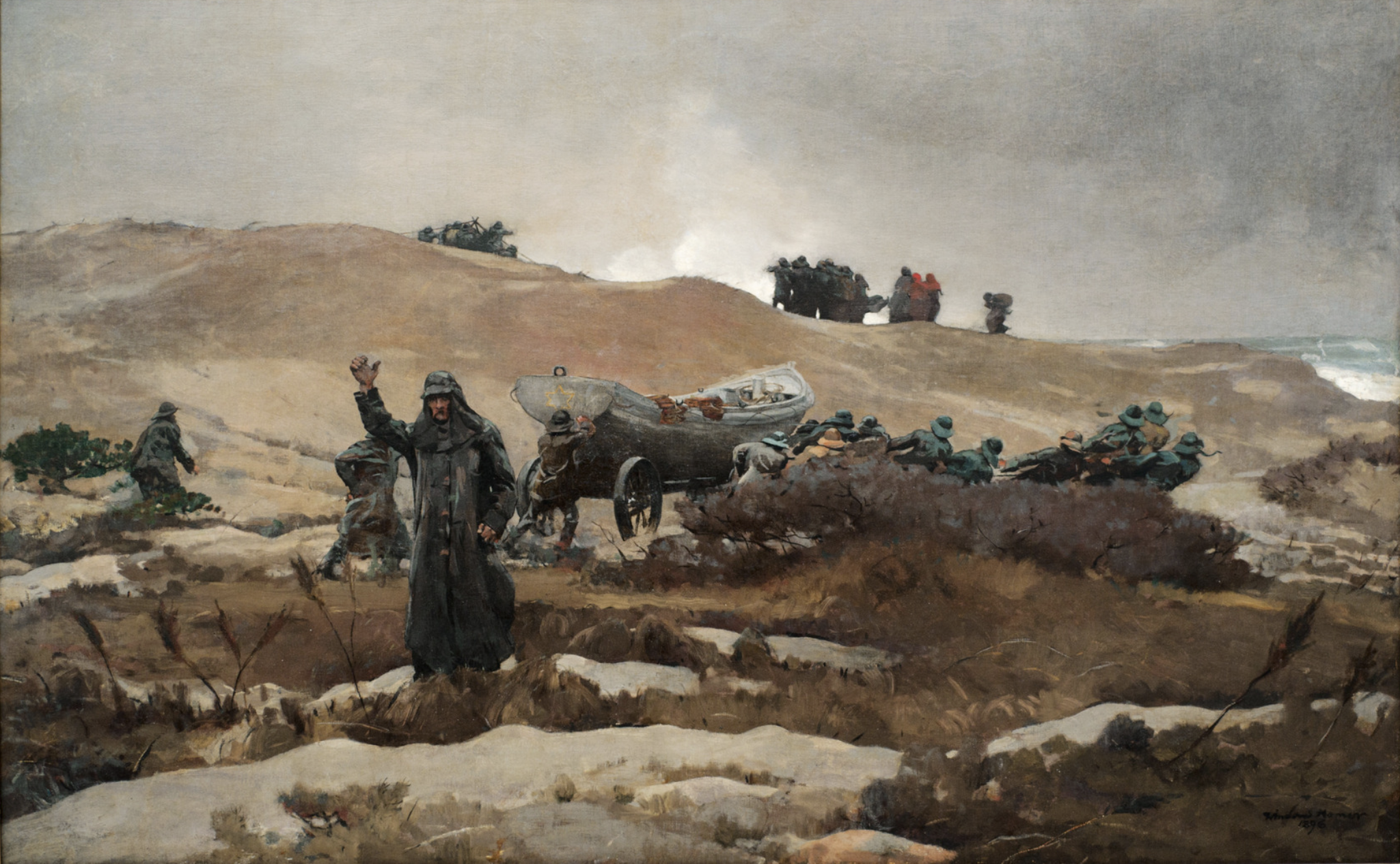
The Wreck by Winslow Homer c 1896
 Moments Matter MD